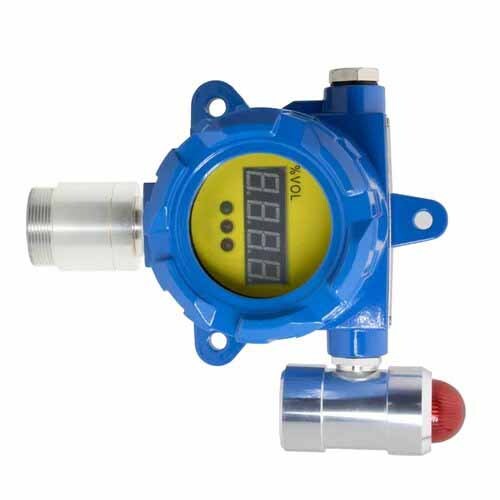
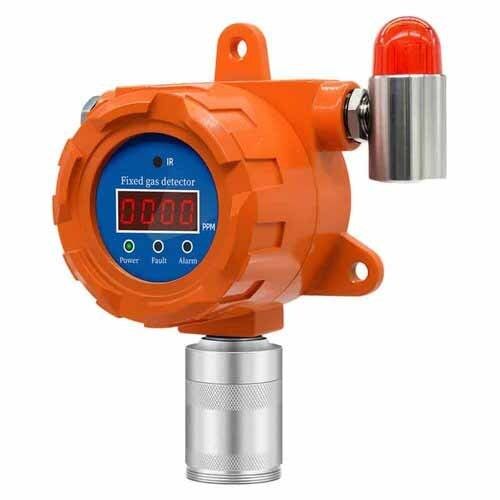
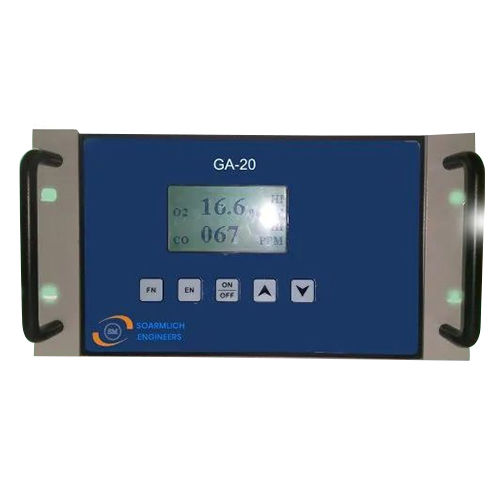
Natural Gas Monitoring Transmitter About
| Usage/Application | Industrial |
| Brand | Soarmlich Engineers |
| Voltage | 24V DC |
| Operating Range | 0-100% LEL |
| Product Weight | 1.49 kg |
| Response Time | 60s |
| Material | Mild Steel |
| Operating Temperature | -40 to +70 Degree Celsius |
| Output Signal | 20mA |
| Accuracy | 5 % |
| IP Grade | IP65 |
Enhanced Industrial SafetySoarmlich Engineers' Natural Gas Monitoring Transmitter ensures continuous and accurate monitoring of combustible gas levels within industrial environments. Its robust build and high ingress protection make it suitable for challenging locations, minimizing the risk of hazards by providing timely alerts when gas levels approach dangerous thresholds.
Precise, Real-Time MonitoringEquipped with advanced sensors, this transmitter offers swift detection and a 60-second response time. The 5% accuracy ensures that you receive reliable data, supporting immediate and informed action to protect personnel and equipment from potential gas leaks or explosions.
FAQ's of Natural Gas Monitoring Transmitter:
Q: How is the Soarmlich Natural Gas Monitoring Transmitter installed in industrial environments?
A: Installation involves securely mounting the mild steel unit in an area where natural gas presence is most likely. The device is then connected to a 24V DC electric supply and interfaced with monitoring systems using its 20mA output signal. Proper placement ensures optimal detection and response.
Q: What are the primary benefits of using this natural gas transmitter for industrial facilities?
A: The main advantages include early detection of hazardous gas levels, enhancing worker safety, and preventing costly damages. Its fast 60-second response time and robust IP65 housing ensure reliable operation in harsh conditions, reducing the risk of unplanned downtime or accidents.
Q: When should the natural gas monitoring transmitter be deployed or recalibrated?
A: The transmitter should be installed prior to the commencement of gas-related industrial processes and after maintenance or relocations. Regular calibration is recommended according to the manufacturer's guidelines or industry standards, typically every 6-12 months, to maintain optimal accuracy.
Q: Where is this transmitter best utilized within an industrial facility?
A: This transmitter is ideal for placement near natural gas pipelines, storage areas, compressors, or processing units where the risk of leaks is highest. Its rugged, IP65-rated design allows deployment both indoors and in partially exposed environments.
Q: What process does the transmitter follow to detect natural gas and alert operators?
A: The transmitter uses sensitive gas sensors to continuously sample ambient air, providing real-time readings of gas concentrations. Upon detecting levels approaching the LEL threshold, it sends an alert through its output signal so operators can take immediate action.
Q: How does the design of this transmitter contribute to its performance and durability?
A: Constructed from mild steel and sealed to an IP65 standard, the transmitter is protected against dust, water, and mechanical impact. This ensures dependable performance even in extreme industrial conditions, maintaining a long operational lifespan with minimal maintenance.
 Chat with us


 Send Inquiry




 Send Inquiry
 Send Inquiry
 Send SMS


