About
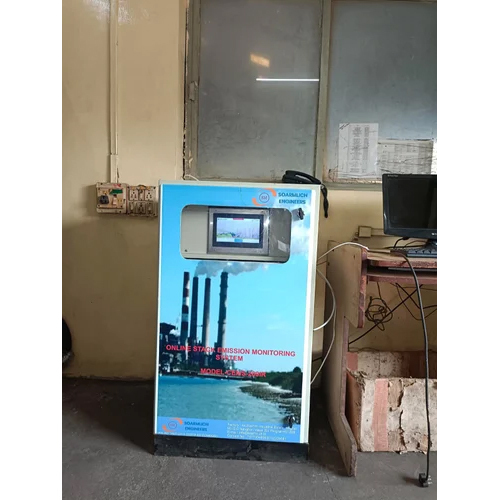
Our Stack Monitoring सेवाएं feature an Automatic system with a Digital display for precise emissions tracking. Housed in durable SS (stainless steel) and weighing just 2kg, it operates efficiently on a 90-220V source voltage and draws 16A current. Ideal for continuous emission monitoring, it ensures regulatory compliance and environmental safety. Widely used in industries like power plants, cement, steel, and chemicals, it detects pollutants such as SOx, NOx, CO2, and particulates. Engineered for high performance and reliability, it streamlines reporting and enhances environmental accountability.
| Brand |
SME |
| Product Type |
Nox Analyzer |
| Power Supply |
Electricity |
| Model Name/Number |
2991 |
| Usage/Application |
Industrial |
| Automation Grade |
Automatic |
| Display Type |
Digital |
| Weight |
2kg |
| Source Voltage 90 |
220 V |
| Material |
SS |
| Current |
16 A |
| Warranty |
1 Year |
| Mounting |
Wall Mount |
| Shape |
Rectangular |
| Country of Origin |
Made in India |
Comprehensive Emission MonitoringDetect and quantify a wide range of stack emissions, including particulate matter and various gases, using advanced isokinetic sampling and NDIR technology. This ensures precise measurement even in demanding industrial environments, supporting effective air pollution control and compliance with regulatory standards.
Convenient Data Management and AccessWith the capacity to store over 10,000 records, the system offers both digital and analog outputs and provides remote accessibility through dedicated software. Daily and monthly emission reports are automatically generated in PDF or Excel formats, allowing for effortless tracking and documentation of emission parameters.
Adaptable and Reliable OperationsThe system supports adjustable test speeds, customizable widths, and multiple sampling points, catering to diverse industrial applications. With integrated alarms for high and low emission thresholds, and semi-automatic/automatic control modes, it delivers both flexibility and reliability for continuous emission monitoring.
FAQ's of Stack Monitoring सेवाएं:
Q: How does the stack monitoring system detect and measure emissions?
A: The system uses isokinetic sampling and gravimetric/non-dispersive infrared (NDIR) analysis to accurately detect particulate matter, SO2, NOx, CO, CO2, and O2 in industrial stack emissions. Each measurement is performed in real-time and displayed digitally, complying with CPCB/USEPA/ISO standards.
Q: What are the benefits of remote data access and automatic report generation?
A: Remote access enables authorized users to monitor stack emissions data 24x7 from anywhere in India, while the system's automatic daily and monthly report generation in PDF/Excel formats enhances data management, regulatory compliance, and operational efficiency.
Q: When should I consider the periodic calibration of the monitoring equipment?
A: Periodic calibration is recommended according to manufacturer's guidelines or regulatory requirements to maintain measurement accuracy and ensure ongoing compliance with air quality standards.
Q: Where can this stack monitoring system be installed and what kind of industries can use it?
A: The monitoring system can be wall or stack mounted on industrial stacks up to 100 meters in height. It is suitable for diverse industries requiring air pollution control and emission monitoring, such as power plants, cement manufacturing, and chemical processing.
Q: What is the process for emission sampling and data collection?
A: Isokinetic sampling collects emissions from one or multiple stack points as required. Detected values are measured by gravimetric or NDIR methods, logged in real time, and stored digitally. The system also supports customizable test speeds, widths, and stroke according to specific monitoring protocols.
Q: How does the alarm and control system work for emission limits?
A: An integrated alarm alerts operators to high or low emission levels, ensuring timely action to avert non-compliance or safety risks. The control mode can be set to automatic or manual operation depending on user preference or application needs.
Q: What features improve the usability and maintenance of the stack monitoring system?
A: The equipment is designed for low maintenance and offers features like real-time monitoring, extensive data storage, automatic and manual controls, support for multiple interfaces (RS232, USB, Ethernet), and robust operation across a broad temperature and humidity range.