Online Emission Surveillance System About
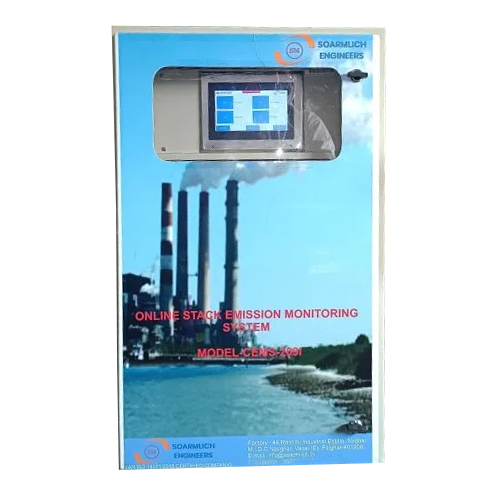
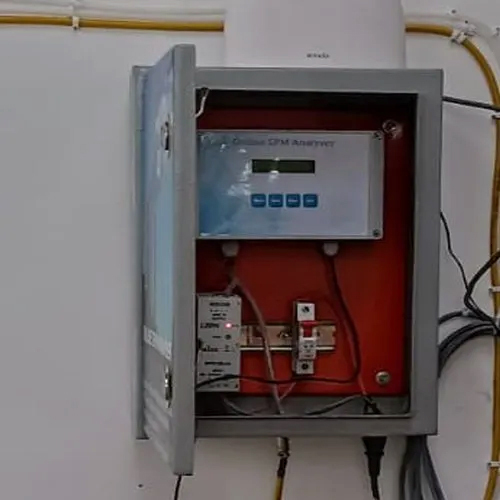
Online Continuous Emission Monitoring System is a fully integrated, single compact analyzing unit up to 7 gases. It is designed with wide measurement range of 0-100PPM up to 0-10000PPM. The system has widely accepted, certified performance that is completely complies with the advanced monitoring standards. It is easy to install & maintain, and does not require any special training or skill. It has separate sensors for the monitoring true NOx (NO+NO2). Online Continuous Emission Monitoring System is ideal for power plants, gas turbines, boiler systems - coal, oil & gas fired, thermal oxidizers, petrochemical & refineries, pulp & paper, bio-fuel power generation, etc.
Product Details:
| Enclosure | 19" Rack |
| Frequency | 60 Hz |
| Humidity Range | 95 % |
| Material | Mild Steel |
| Model Number | CEMS-209IR |
| Operating Temp | - 20 to + 250 oC |
| Phase | Single Phase |
| Voltage | 240V AC |
| Wattage | 400 W |
| Country of Origin | Made in India |
| Brand | Asian Paints |
| Weight | 50 kg |
| Usage/Application | Stack Emission Monitoring , Process Monitoring & Online Emission Monitoring System |
| Response Time | Less than 10 Second |
| Power Supply | 230 V AC |
| Humidity | 95% RH |
| Display Type | Touch screen LCD Display |
| Dimensions | 570 x 600 x 370 mm |
| Digital Output | Rs-485 |
| Analog Output | 20 mA |
| Accuracy | +/- 2% |
| Finish | High Gloss |
| Paint Type | Emulsion |
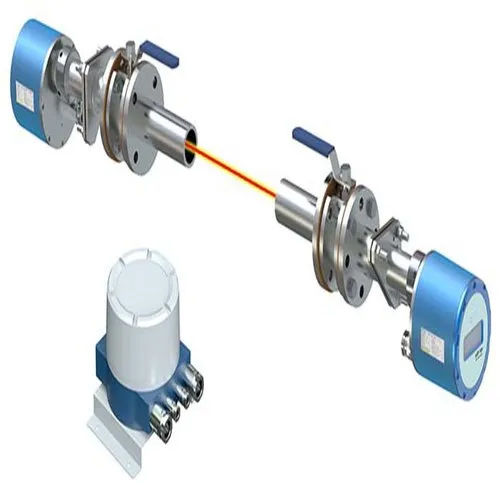
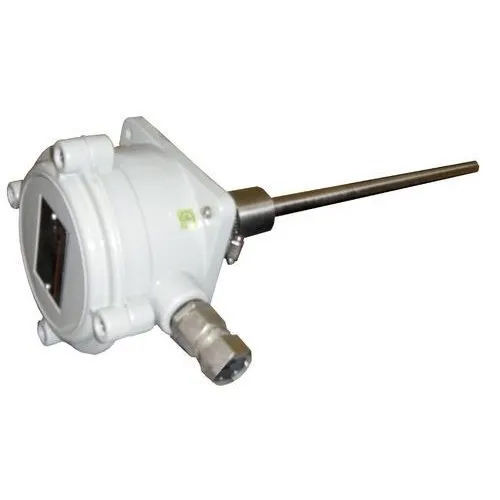
Advanced Emission Monitoring TechnologyEquipped with Electrochemical and NDIR sensors, the system accurately measures a broad range of industrial emissions. Continuous extractive sampling ensures reliable data collection, aligning with stringent CPCB and international standards.
Flexible Data Management and ConnectivityStore measurements internally or access data remotely through cloud connectivity. Integrated Modbus and TCP/IP protocols enable seamless integration with existing industrial networks for comprehensive analysis and reporting.
Rugged Design and On-site CalibrationBuilt with IP65-rated powder-coated MS enclosure, the surveillance system withstands challenging industrial conditions. Users benefit from automatic or manual calibration options and on-site calibration support, ensuring optimum accuracy and minimized downtime.
FAQs of Online Emission Surveillance System:
Q: How does the Online Emission Surveillance System ensure accurate emission monitoring?
A: The system employs advanced Electrochemical and NDIR sensors that provide precise detection of various pollutants. Continuous extractive sampling allows for uninterrupted monitoring, while automatic or manual calibration maintains optimal sensor accuracy.
Q: What type of data storage and connectivity options are available?
A: Data is securely stored in internal memory, with additional options for cloud connectivity. This allows users to access and manage emission records locally or remotely, depending on operational requirements.
Q: When should calibration be performed on the emission monitoring system?
A: Calibration can be conducted automatically, based on user-defined schedules, or manually as needed. On-site calibration support ensures the system remains reliable and within compliance at all times.
Q: Where can this emission surveillance system be installed?
A: Designed for industrial applications, the system can be mounted in environments requiring IP65 ingress protection. The powder-coated MS enclosure makes it ideal for deployment in harsh or dusty locations.
Q: What is the process for integrating this system with existing infrastructure?
A: Integration is straightforward using Modbus and TCP/IP protocols. The system delivers output signals via 4-20 mA and digital formats, and comes with a customizable cable length for optimal setup flexibility.
Q: How is alarm notification provided during emission threshold breaches?
A: If emissions exceed set limits, the surveillance system triggers both audio and visual alarms to notify operators promptly, enabling swift action to mitigate risks.
Q: What benefits do users gain from using this monitoring system?
A: Users benefit from real-time emission data, compliance with CPCB and international guidelines, reliable performance in industrial conditions, flexible calibration, and easy software integration for analysis and reporting.
 Chat with us


 Send Inquiry




 Send Inquiry
 Send Inquiry
 Send SMS
 Call Me Free


