About Online Effluent Monitoring System
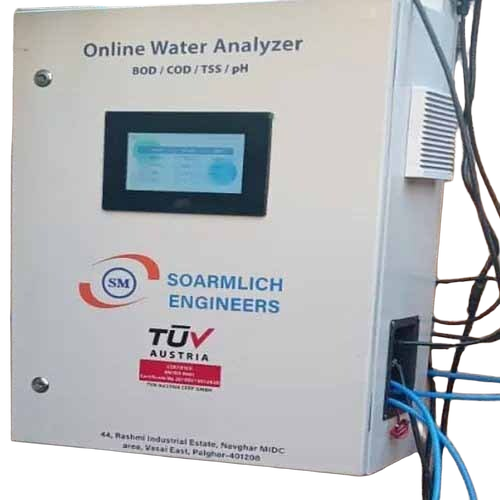
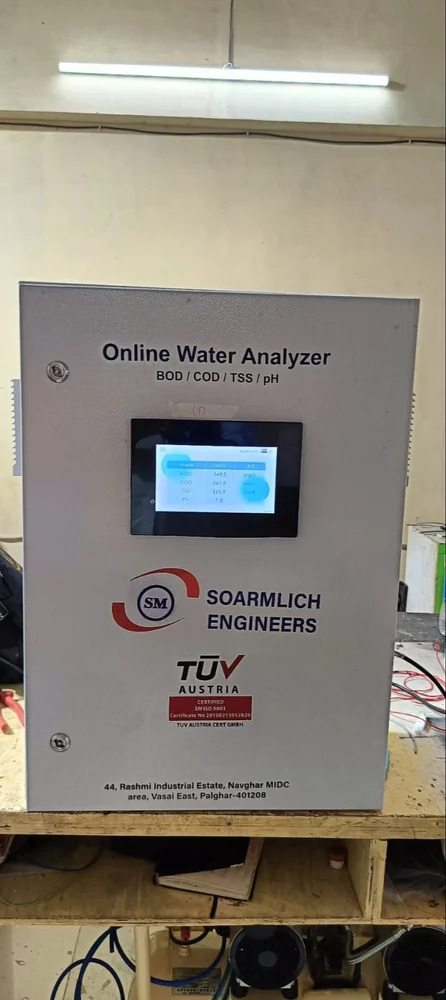
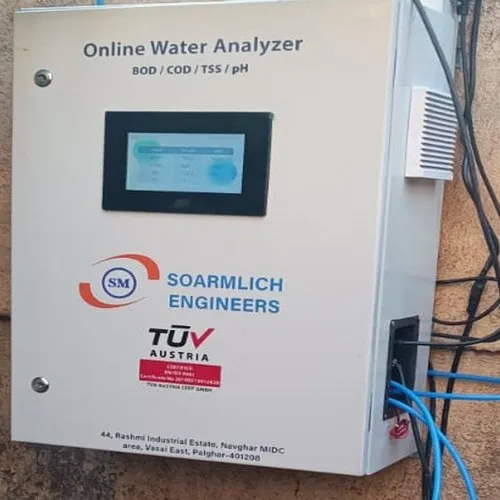
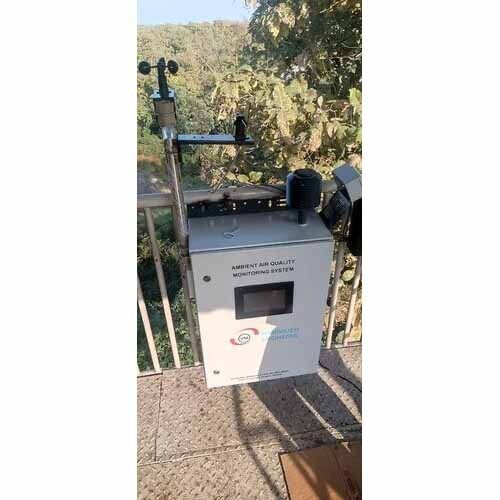
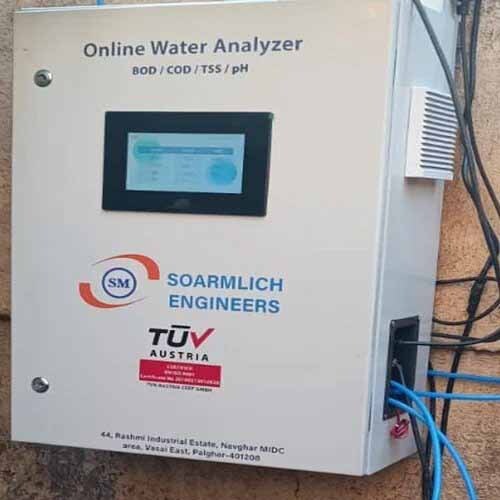
Online Effluent Monitoring System is an advanced solution that allows continuous monitoring and analysis of the effluent from industrial wastewater treatment plant discharges. The monitoring systems are used in various industries, including manufacturing, chemical, pharmaceutical, food processing, power generation, and municipal wastewater treatment plants, to help ensure environmental compliance and provide real-time water quality data. The system is designed using high-quality UV-Visible spectroscopy technology and is capable of measuring important parameters like pH, electrical conductivity, total dissolved solids (TDS), organic matter, nitrate concentration, color and polycyclic aromatic hydrocarbons (PAH). Its digital system is equipped with a user-friendly LCD touch display, RS485 communication interface and 4-20 mA output for ease of integration with industrial automation and SCADA systems. Built to last with a strong aluminium and MS powder-coated body and with IP65 protection, it is reliable even in the most challenging industrial environments with temperatures from 0 to 65 degrees Celsius and humidity up to 90%RH.
The Online Effluent Monitoring System is powered by a single-phase 110-230 V AC power supply, and provides very accurate readings, with an accuracy of 2%, has a quick response time, and requires minimal maintenance. The automatic pulse blower cleaning system keeps optical windows free of contamination, and the long life xenon lamp reduces the need for maintenance and operating costs. The system neither needs chemical reagents as compared with ordinary analyzers and secondary pollution will be prevented, therefore, the system will operate economically. With full-spectrum measurement and advanced chemometric algorithms, it is possible to measure multiple water quality parameters with minimal interference from changing water quality in effluents and chloride ions. Built-in web interface enables remote internet-based monitoring, diagnostics and troubleshooting via laptop, tablet or smartphone, increasing operational efficiency and minimizing downtime. The Online Effluent Monitoring System is designed for continuous use in industrial applications, and offers high performance, long life and dependable monitoring to ensure effective wastewater management, regulatory compliance and protection of the environment.
Advantages of an Online Effluent Monitoring System :
- Continuous and real-time monitoring of water quality of wastewater for improved process control and environmental compliance.
- Avoids using chemical reagents, thus lowering operating costs and secondary pollution when monitoring.
- Maintains the accuracy and reliability of measurements with advanced UV Visible Spectroscopy with little effect from composition changes in waste water.
- Seamless integration with industrial automation systems with RS485 communication and remote web monitoring.
Technical Details 
Advanced Monitoring Technology for Industry Compliance
Utilizing state-of-the-art UV Visible Spectroscopy, the SME-WA-i01 delivers continuous and accurate measurement of effluent parameters, ensuring industries stay compliant with environmental regulations. The panel-mounted design integrates seamlessly into control systems, offering durability and automatic data gathering.
Versatile Connectivity and Reliable Performance
Equipped with RS485 communication and 4 to 20 mA output, this system supports easy interface with industrial automation infrastructure. The rapid response and measuring times enhance efficiency and allow for timely corrective actions to maintain water quality standards.
Engineered for Tough Environments
Built with an MS powder-coated enclosure and engineered for IP65 protection, the SME WA i01 endures harsh operating conditions. Operating efficiently in high-humidity and wide temperature ranges, it is an ideal solution for a variety of industrial effluent applications.
FAQ's of Online Effluent Monitoring System:
Q: How does the SME-WA-i01 monitor effluent water quality?
A: The system uses advanced UV Visible Spectroscopy to continuously measure pH, Electrical Conductivity (EC), and Total Dissolved Solids (TDS) within a wide range. Data is processed and transmitted via RS485 or 4-20 mA outputs for real-time monitoring and quick response.
Q: What is the process for installing the SME-WA-i01 unit?
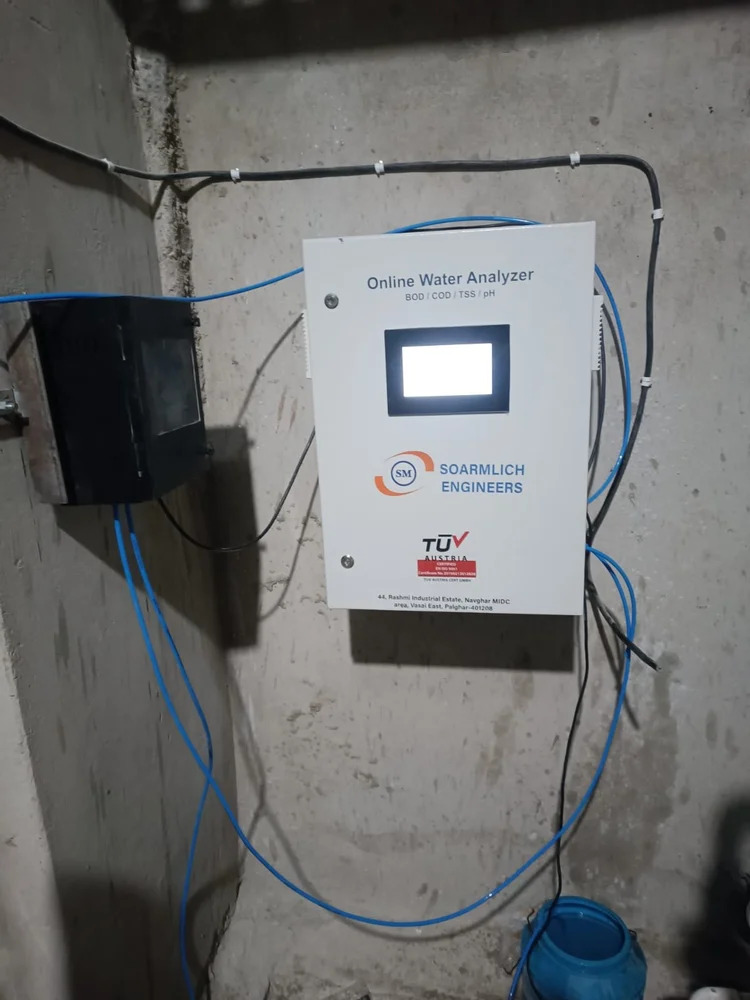
A: Installation involves panel-mounting the system in a suitable industrial environment. The device connects to a single-phase power supply (230 V AC), and its probes, with a maximum depth of less than 10 meters, are placed in the effluent stream to begin automated monitoring.
Q: When should I use the SME-WA-i01 Monitoring System?
A: The system is ideal for continuous monitoring of effluent parameters in industrial setups where regulatory compliance and environmental safety are priorities. Its robust design allows for use in challenging conditions involving high humidity and fluctuating temperatures.
Q: Where can the SME-WA-i01 be effectively deployed?
A: It is best suited for installation in industrial facilities, wastewater treatment plants, and sites where effluent quality is regularly monitored. The IP65 protection and corrosion-resistant construction make it suitable for various demanding locations.
Q: What are the benefits of using this online monitoring system?
A: Using this system ensures compliance with environmental standards, helps detect effluent anomalies promptly, and reduces manual sampling. The rapid response and high accuracy provide confidence in maintaining process quality and avoiding penalties.
Q: How is data output from the system for analysis?
A: The device features RS485 communication protocol and 4-20 mA output, allowing seamless integration with SCADA systems or data loggers for continuous analysis, monitoring, and documentation of effluent conditions.
Q: What is the measuring range and how accurate are the readings?
A: The SME-WA-i01 measures concentrations from 0 to 5000 mg/l with an accuracy of 2%. This performance allows for precise monitoring, regular updates, and quick detection of adverse changes in effluent composition.
 Chat with us



 Send Inquiry



 Send Inquiry
 Send Inquiry
 Send SMS
 Call Me Free


